2 min read
Why JavaScript Feels Fast Even Though It's Single-Threaded
JavaScript runs on one thread, It can only do one thing at a time! But thanks to the browser, it still feels quick and smooth.
But how?
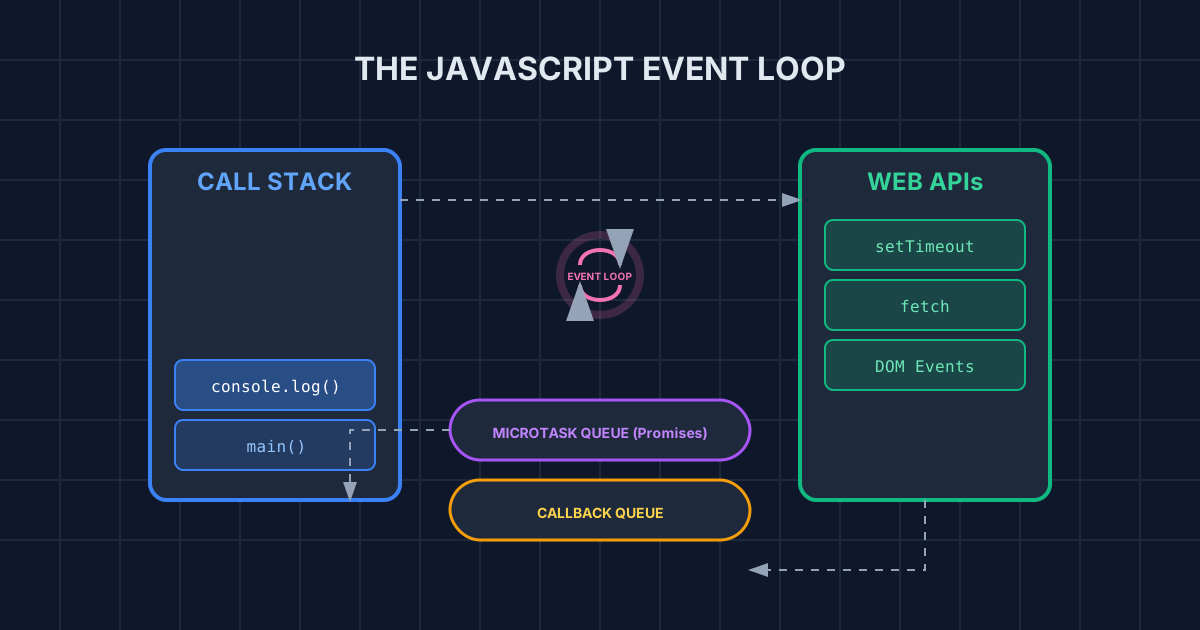
Understanding the JavaScript Call Stack and Event Loop
JavaScript runs in a single thread. It can only do one thing at a time. To keep things smooth, the browser uses a few parts that work together: the call stack, Web APIs, the event loop, the callback queue and the microtask queue.
Because of this setup, JavaScript feels asynchronous even though it runs on one thread.
The Call Stack
The call stack is where your functions run. If you call a function, it goes on the stack. When it finishes, it gets removed. If the stack is busy, nothing else can run.
Web APIs
The browser gives JavaScript extra tools like timers, fetch and DOM events.
When you call setTimeout or fetch, the work goes to these Web APIs.
They run in the background, away from the call stack.
The Callback Queue
When a Web API finishes its work, it sends the callback to the callback queue. The callback waits there until the call stack is empty. The event loop checks the stack all the time and runs the next item when the stack is free.
The Microtask Queue
The microtask queue was added because promises needed more predictable timing.
A common example is when you call an API to get data with fetch.
When the data comes back, you want your promise code to run right away so the page can update, not wait behind timers or random events.
So microtasks run before the normal callback queue. This keeps promise timing stable and easy to trust.
The Event Loop
The event loop is what keeps everything moving.
It checks the call stack. If the stack is empty, it sends work from the microtask queue or the callback queue back into the stack.
This is why JavaScript feels asynchronous. The event loop keeps switching between queues and the stack so work flows smoothly.
Simple Flow
- You call a function, it goes on the stack.
- If it uses a Web API, the work goes to the browser.
- When that work finishes, the callback moves to a queue.
- The event loop waits for the stack to be empty, then runs the next item.
- Microtasks (promises) always run first.